
By Adam Jalaludin, Grains Biosecurity Officer, Biosecurity Queensland, Queensland Department of Primary Industries
Autumn sowing often feels like a race against the calendar. Once the crop is in the ground, the focus quickly shifts to covering hectares and hoping for follow-up rain. However, the May–June period, from emergence through to early tillering, is one of the most critical windows for vigilance in broadacre grains.
Many of the pests and diseases that create the greatest challenges later in the season establish quietly during these early weeks. It is also the time when unusual or new issues are most likely to be detected if you are looking. Early crop checks are not just about protecting this year’s yield, they are key to preserving management options and avoiding costly surprises later in the season.
Early crop establishment tells a story
Patchy emergence, uneven stands or poor early vigour are often written off as sowing depth, moisture or soil constraints. While these are common causes, early establishment issues can also point to soil-borne diseases, seed quality problems or early insect pressure.
Rhizoctonia, take-all, and crown rot all infect crops early, even though clear symptoms may not appear until much later. Likewise, early insect feeding can limit tiller numbers and root development long before damage becomes obvious.
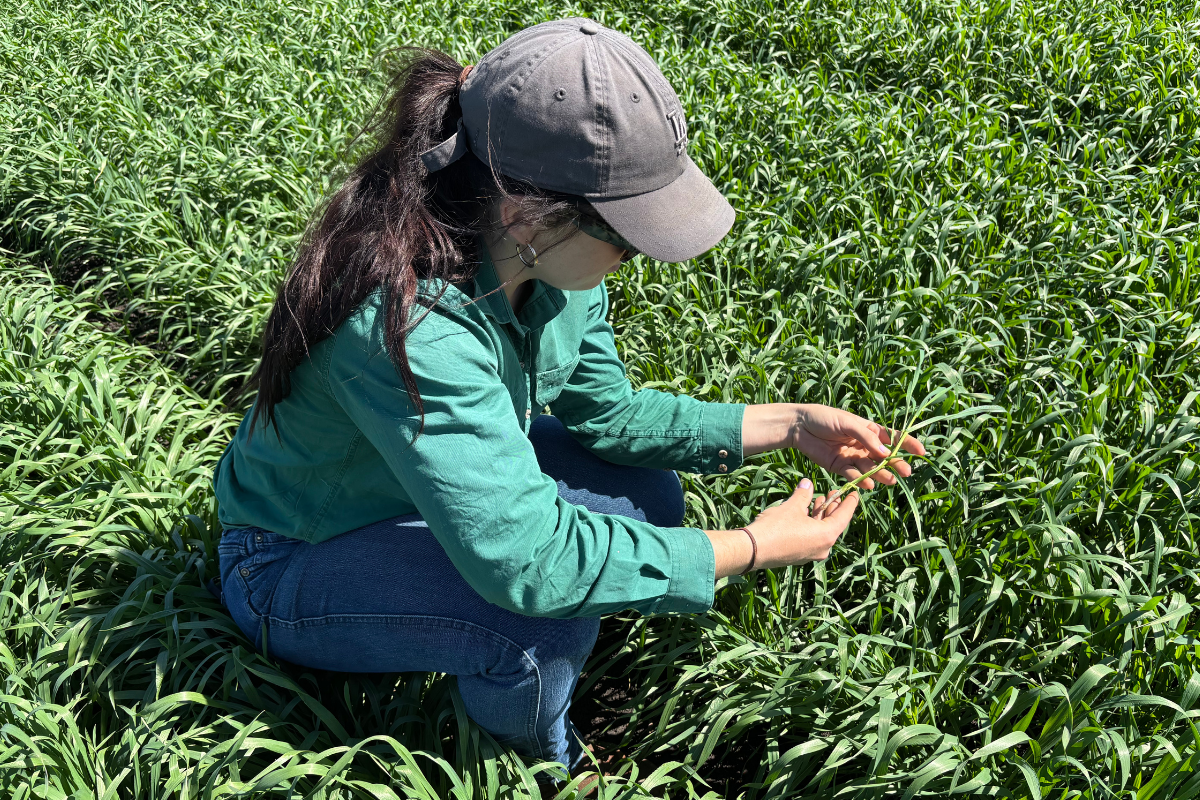
The key message for growers and agronomists is simple: walk crops early. Patterns across paddocks, not just individual plants, often provide the first clues that something is not right.
Insects: low numbers, high impact
In May–June, insect pressure is often subtle rather than dramatic. However, small plants are particularly vulnerable, and low pest numbers can still have significant consequences.
Aphids are a good example. Oat aphid, corn aphid and green peach aphid may be present at low levels, but their role as vectors of Barley yellow dwarf virus (BYDV) makes early detection critical. Crops adjacent to grass weeds, volunteer cereals or pasture paddocks are at higher risk.
Redlegged earth mite, Blue oat mite and Lucerne flea can also be active following autumn rainfall. Feeding damage is often more noticeable than the insects themselves, and misidentification can lead to unnecessary or ineffective insecticide use.
From a biosecurity standpoint, correct identification matters. New incursions (remember Russian wheat aphids?), shifts in pest behaviour or insecticide resistance issues are most likely to be noticed early in the season, but only if insects are properly identified and observations recorded.
Diseases establish before they announce themselves
Many foliar diseases begin developing well before symptoms become obvious. Stripe rust in wheat is a prime example. Early infections can be easy to miss, particularly in susceptible varieties or early sown crops.
Unexpected disease severity, or disease appearing in varieties rated as resistant, should always prompt closer scrutiny. These situations can indicate changes in pathogen populations and are exactly the kinds of signals that underpin effective disease surveillance.
Soil and stubble-borne diseases also deserve attention early, not because they are easily diagnosed at this stage, but because their impact can be determined early. Crown rot, for example, infects crops during establishment, even though its characteristic whiteheads are not seen until much later in the season. Early crop stress can exacerbate yield loss, and observations made now help inform rotation and variety decisions for future seasons.
Weeds as biosecurity bridges
Weeds are often viewed solely through a competition or resistance lens, but they also play a major role in biosecurity risk.
Volunteer cereals and grass weeds act as green bridges for aphids and viruses. They can also host rusts, mites and other pests that move into emerging crops. In some cases, weeds mask early disease symptoms, delaying diagnosis and response.
Survivor weeds that do not match expected resistance patterns should be noted. While most cases will relate to known resistance issues, unexpected responses can occasionally flag new or emerging problems.
Movement matters
The early season is a high-risk period for pest and disease spread due to frequent machinery movement. Contractors, shared equipment and wet conditions all increase the likelihood of soil, plant material and seed being moved between paddocks and farms.
Clean-down practices do not need to be perfect to be effective. Targeted hygiene, especially when moving out of known problem paddocks or between regions, can significantly reduce biosecurity risk.
Seed sources also matter. Using clean, known seed reduces the risk of introducing pests, diseases or resistant weed seeds.
Agronomists as the early warning system
Agronomists play a critical role in Australia’s plant biosecurity system. In many cases, they are the first to see something unusual. It could be a symptom that doesn’t fit, a pest behaving differently, or damage that doesn’t align with seasonal expectations.
Early reporting is not about creating alarm. It is about ruling out serious issues quickly and protecting growers from larger impacts down the track. When in doubt, a quick conversation with plant pathologists, entomologists or state biosecurity officers can provide clarity and peace of mind.
A simple message for early season
As crops establish through May and June, the message for growers and agronomists is clear:
Biosecurity is not a separate task from crop management. It is part of good agronomy, and in the early season, a few extra minutes in the paddock can make all the difference.
For more information, contact your local Grains Biosecurity Officer or visit the Grains Farm Biosecurity Program website at grainsbiosecurity.com.au. The Grains Farm Biosecurity Program is managed by Plant Health Australia (PHA) and funded by growers through Grain Producers Australia (GPA).