
By Guy Nelson, Department of Primary Industries and Regions, South Australia
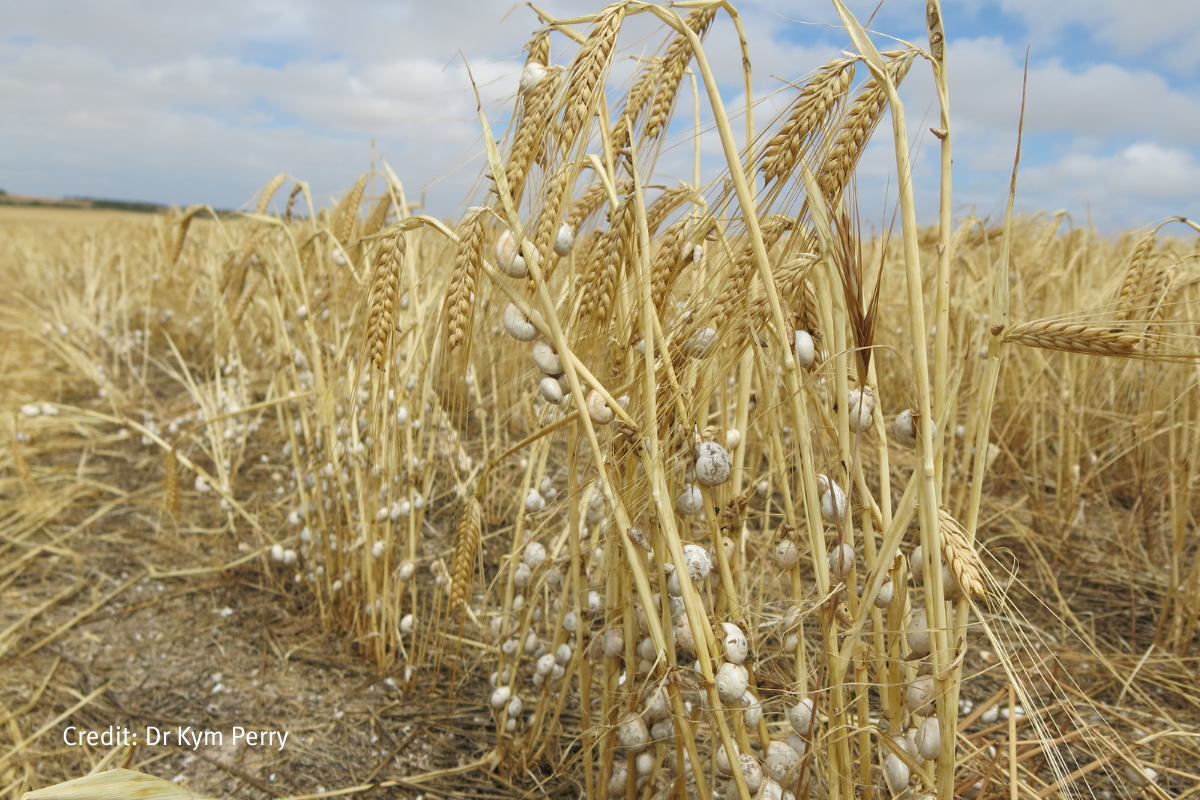
Snails are a persistent and costly pest in South Australia’s grain-growing regions, and their spread can be driven by human activity. While snails naturally move short distances, the greatest risk of paddock contamination comes from snails ‘hitchhiking’ on machinery, vehicles, boots, and equipment. Managing this risk through good hygiene practices is critical to reduce the risk of production losses, maintain grain quality, and reduce long-term management costs.
Snail infestations can have significant impacts on grain production and market access. Conical snails (Cochlicella acuta, Cochicella barbara) and round snails (Cernuella virgata, Theba pisana) contaminate harvested grain, increase cleaning and screening costs and can result in grain being downgraded or rejected at receival points. High snail loads may also damage harvesting equipment, increase wear on machinery, and reduce harvest efficiency.
With increasing movement of machinery between properties and regions (particularly during seeding and harvest), the risk of spreading pest snails continues to grow. Preventing their spread and managing infestations early is far more effective and economical than trying to control established infestations, which often require multiple years of baiting, equipment decontamination and ongoing monitoring.
Beyond direct contamination, snails can:
Why machinery and boot hygiene matters
Snails can easily attach to harvesters, seeders, chaser bins, trucks, boots and clothing. Once introduced into a paddock, populations can establish quickly, contaminating grain, increasing harvest costs, and reducing marketability.
Good hygiene practices not only help manage local snail infestations but also support broader biosecurity efforts by limiting the movement of pest species between farms and regions. Preventing spread is a key part of protecting productivity and maintaining access to domestic and international markets.
Preventing the spread
Simple and consistent hygiene measures can significantly reduce the risk of snail movement between paddocks:
Use farm-zoning to reduce risk:
Manage machinery, visitors and people:
Monitor and report possible pests:
Everyone has a role to play
Snail management is a shared responsibility across the grains industry. Growers, agronomists, contractors, and transport operators all play an important role in reducing the spread of snails. By adopting simple hygiene practices and staying vigilant, the industry can slow the movement of snails and reduce their impact on grain production.
For advice on snail identification, management, or biosecurity practices, contact your local Grains Biosecurity Officer. Or refer to the GRDC guide Nail the snails.
For more information, contact your local Grains Biosecurity Officer or visit the Grains Farm Biosecurity Program website at grainsbiosecurity.com.au. The Grains Farm Biosecurity Program is managed by Plant Health Australia (PHA) and funded by growers through Grain Producers Australia (GPA).