
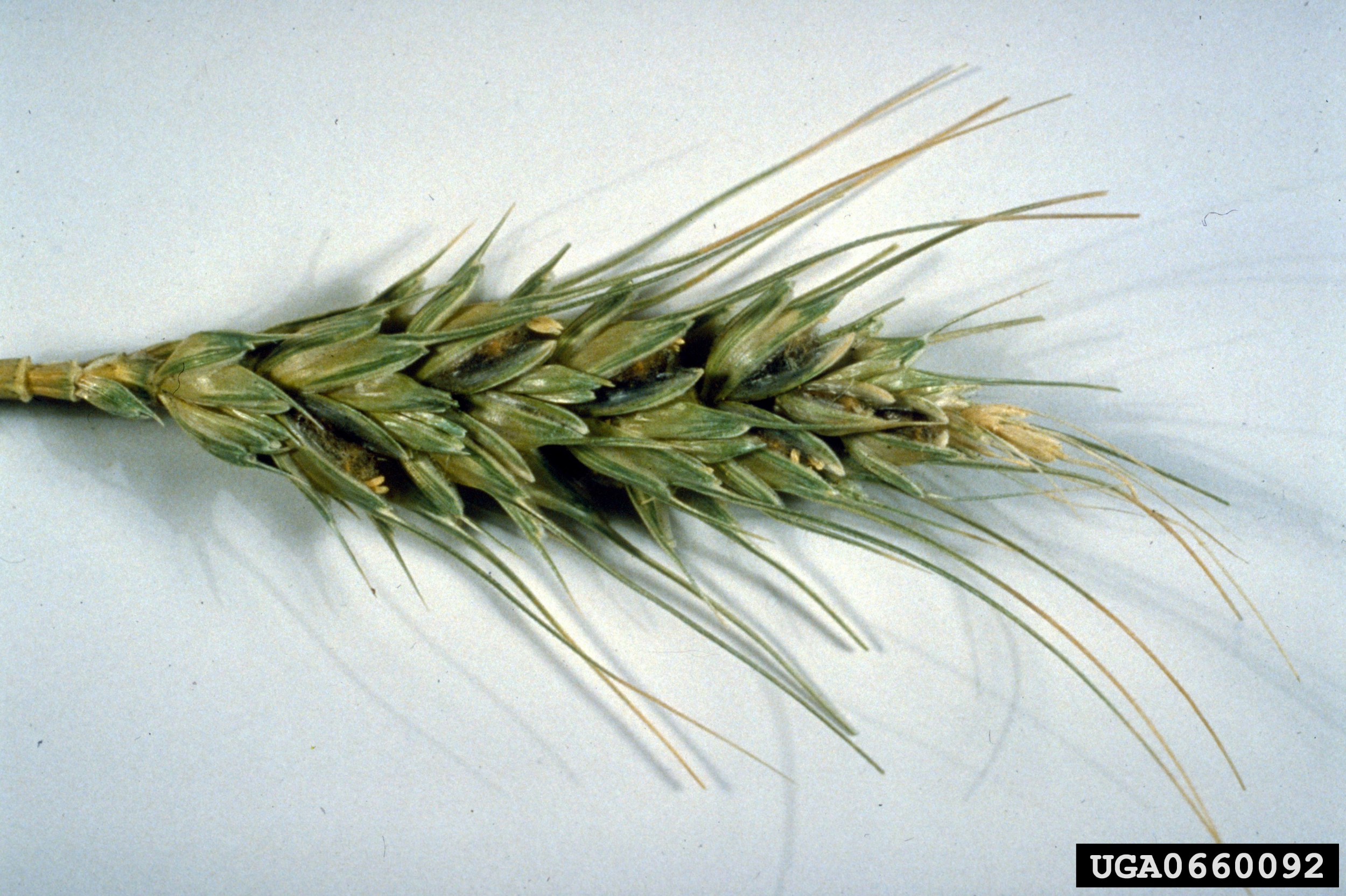
Karnal bunt symptoms. Photo: Ruben Durán, Washington State University, bugwood.org
By Jordan Scott, Grains Farm Biosecurity Officer, South Australia
Endemic fungal bunt diseases will help develop diagnostic tools for the exotic Karnal bunt, which could devastate the grain export trade if it were to be discovered in Australia.
The fungal disease Karnal bunt remains exotic to Australia but is regarded as one of the most significant biosecurity and market access threats to the grains industry.
Detection of a single infected grain in Australian exports could result in the closure of more than 45 overseas markets. The challenge is compounded by the difficulty in distinguishing Karnal bunt from other endemic bunt species using conventional methods.
GRDC has invested in a 5-year project, ‘National Surveillance System for Karnal bunt’, led by the South Australian Research and Development Institute (SARDI), as part of the National Grains Diagnostic and Surveillance Initiative. It will address these challenges by:
Ryegrass bunt (Tilletia walkeri) and common bunt (Tilletia laevis) are both present (endemic) in Australia and share close biological and genetic characteristics with Karnal bunt. While the molecular diagnostics will be developed using Karnal bunt DNA from overseas samples, the endemic bunts provide valuable surrogate species to refine and validate laboratory and field diagnostic protocols without the biosecurity risks of handling the exotic pathogen.
As part of this process, SARDI researchers are actively seeking fresh bunt and smut samples. They are particularly interested in ryegrass bunt and common bunt from across grain-producing regions.
How to help
Growers, agronomists and other industry professionals who encounter suspect bunt or smut in crops or stored grain are encouraged to submit samples through their local grains biosecurity officer (GBO).
Contact your local GBO. For further information specifically regarding the Karnal bunt diagnostics and surveillance project, contact Danièle Giblot-Ducray.
More information: Danièle Giblot-Ducray, Molecular Diagnostic Subprogram Leader, SARDI, daniele.giblot-ducray@sa.gov.au
Launched in 2007, the Grains Farm Biosecurity Program (GFBP) is managed by Plant Health Australia (PHA) and funded by growers through Grain Producers Australia (GPA). The GFBP is an initiative to improve the management of, and preparedness for, biosecurity risks in the grains industry at the farm and industry levels.