
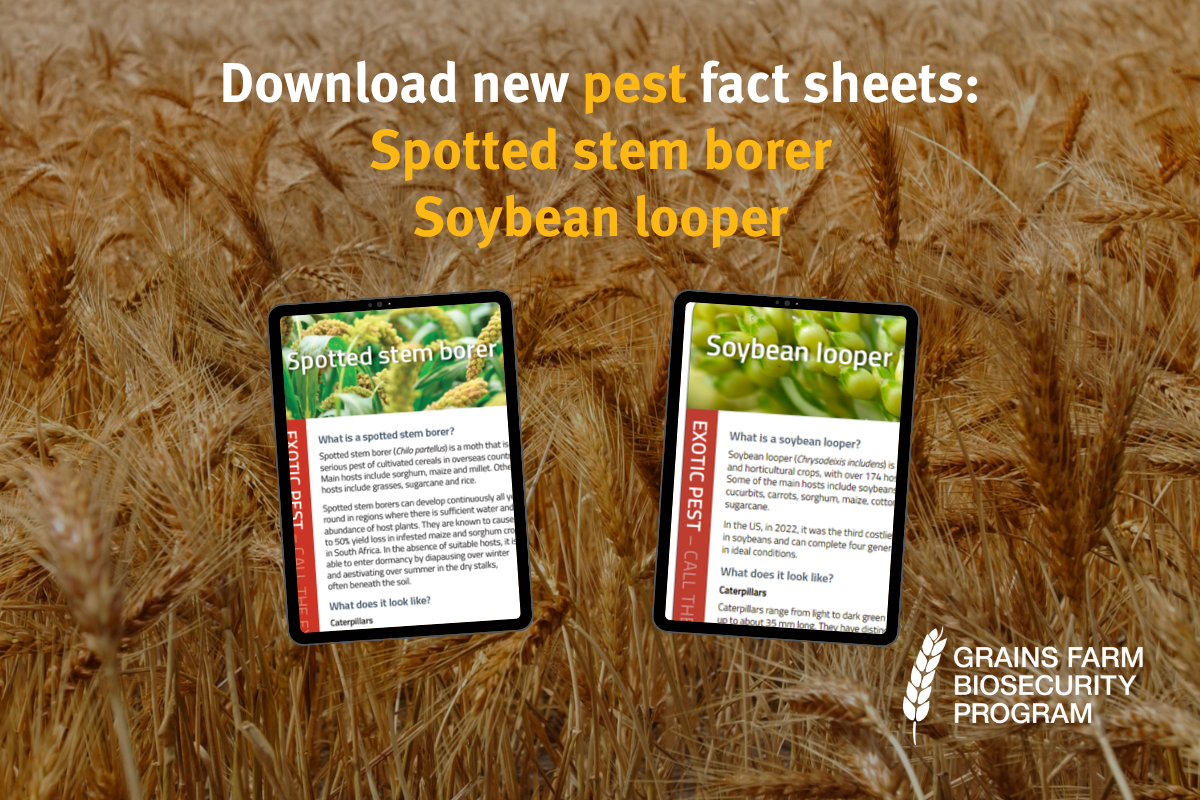
Two new fact sheets are now available to help growers and advisers recognise and report high priority exotic pests of summer crops: soybean looper (Chrysodeixis includens) and spotted stem borer (Chilo partellus).
Both pests are identified as High Priority Pests (HPPs) of the Australian grains industry and are not currently present in Australia. Early detection and reporting are critical to supporting preparedness and reducing the potential impact of an incursion.
Soybean looper is a pest of grain and horticultural crops, with key grain hosts including soybeans, peas, sorghum and maize. Caterpillars can cause leaf damage, defoliation and injury to pods or developing seed.
Spotted stem borer is a pest of maize, sorghum and millet. Its larvae tunnel into plant stems, causing stunting, weakened stems, delayed crop maturity and yield losses.
Several caterpillar and moth species already present in Australia, including native budworm, cotton bollworm and fall armyworm, can cause similar damage. Because identification in the field can be difficult, growers are encouraged to report anything unusual rather than attempting to confirm an exotic pest themselves.
Regular crop monitoring provides an opportunity to identify unusual insects or damage early. Growers can also help reduce the risk of pest movement by maintaining good farm hygiene, cleaning machinery and equipment between properties, controlling volunteer plants and weeds, and encouraging visitors and contractors to follow come clean, go clean practices.
The new fact sheets provide information on pest identification, symptoms to look for, pathways of spread and reporting procedures.
Download the new fact sheets:
If you notice anything unusual, contact the Exotic Plant Pest Hotline on 1800 084 881.